
Ofsted Inspection Updates
Ofsted has updated the way nurseries are inspected from 2025, with clearer report cards that show simple grades alongside short explanations of what each setting does well and where it can improve.
Nurseries are now graded on a five-point scale, Exceptional, Strong Standard, Expected Standard, Needs Attention and Urgent Improvement, across key areas such as teaching, early years care, children’s progress, inclusion, leadership, wellbeing, and behaviour.
Kingston’s New Ofsted Report
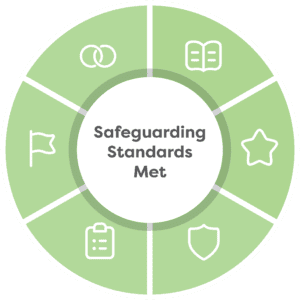
Monkey Puzzle Kingston’s most recent Ofsted report was published on the 5th October 2026, confirming that safeguarding standards are met and that children’s safety and wellbeing remain a top priority. The nursery achieved Expected Standard across the six key areas of inspection, reflecting the high-quality care, learning and support provided by the team. Parents and carers can read the full Ofsted report here to learn more about the inspectors’ findings.
New Ofsted Report

What Ofsted Highlighted
Children’s Welfare and Wellbeing – Expected Standard
The setting has an established key-person system. Practitioners know their key children and provide care that reflects their individual needs. Children develop positive relationships with familiar adults, which supports their emotional wellbeing and sense of belonging. Hygiene and care routines are adapted to children’s ages and stages of development. Practitioners encourage children to develop increasing independence in managing their personal care. For example, staff work with a family to support a child who is learning to manage their toileting needs. Intimate care routines are carried out sensitively and respectfully. Practitioners work with families to ensure that children’s care needs and routines are understood and followed. For example, babies’ sleeping and feeding routines reflect their individual patterns and support their transition into the nursery day. Practitioners provide opportunities for children to take appropriate risks and challenge themselves in a safe environment. For example, in the soft-play area, children climb, balance, jump and explore movement in a variety of ways, helping them to develop coordination, balance, body control and an awareness of risk. Children are provided with healthy meals, snacks and drinks that support their health and wellbeing.
Achievement – Expected Standard
Children are settled in the nursery and develop positive relationships with adults and their peers. They make age-appropriate progress in their knowledge and skills across the areas of learning. Children develop their gross motor skills as they climb, jump, wriggle and move in a range of ways in the soft-play room. They show an understanding of daily routines and transitions, enabling them to move between activities with increasing confidence. They make choices in their play and access resources independently. Children who speak English as an additional language have made progress in developing their English language skills. They use English to communicate their needs and participate in daily activities and routines. Children communicate with adults and their peers, listen to simple instructions and take part in conversations and planned activities. They use developing vocabulary to express their ideas, experiences and interests. For example, they talk about their play and respond to questions from practitioners. Children demonstrate curiosity about the world around them and develop observation skills as they explore their environment. For example, while exploring the outdoor area, they closely observed fallen leaves and noticed different patterns on leaves.
Behaviour, Attitudes and Establishing Routines – Expected Standard
Children demonstrate age-appropriate personal, social and emotional development. They are developing an understanding of the needs of others and are learning to share, take turns and play alongside their peers. Older children show consideration towards younger children during daily interactions and play experiences. This helps children to develop positive relationships and an awareness of the needs of others. Leaders and practitioners establish clear routines and expectations that help children understand what is expected of them and contribute to a sense of security. Children settle into nursery life and develop positive attitudes towards learning that are appropriate to their age and stage of development. Practitioners consider children’s individual needs and circumstances when supporting them through change. For example, a child was helped to prepare for the arrival of a younger sibling through opportunities to interact and play with younger children in the setting. This helped the child to develop an understanding of babies and the changes they would experience at home. Leaders work with families to promote regular attendance and punctuality and encourage consistent habits that support children’s participation in nursery life.
Curriculum and Teaching – Expected Standard
The setting follows the early years foundation stage curriculum and provides learning environments that support children’s development across all areas of learning. Children access a range of experiences, including a soft-play room, outdoor play areas and a music room, which support their physical development, creativity and exploration. The curriculum promotes equality and diversity. For example, staff use their language skills to introduce children to different languages and cultures, including Cantonese and Albanian. The curriculum supports children to develop the knowledge, skills and vocabulary needed for future learning and readiness for school. Staff understand children’s starting points, individual needs and stages of development. They use this information to plan learning experiences that build on what children already know and can do. Practitioners support children’s mathematical development through planned and incidental learning opportunities. For example, children match colours and objects, count during play and daily routines and use positional language, such as ‘behind’ and ‘under’ , with support from staff. These experiences help children develop early mathematical knowledge and vocabulary. Children participate in daily routines and engage in learning experiences. However, opportunities to extend children’s thinking and promote their independence are not consistently maximised. For example, during routine activities, including mealtimes, children are not consistently encouraged to take on simple responsibilities or manage tasks independently. Leaders recognise the need to work with practitioners to further develop their skills in extending children’s thinking and promoting children’s independence.
Inclusion – Expected Standard
The setting benefits from a diverse team of staff who speak a range of languages, supporting communication with children and families, including those who speak English as an additional language. Leaders and practitioners identify children’s needs appropriately, including those with special educational needs and/or disabilities (SEND) and children who may face barriers to learning. The designated special educational needs coordinator has suitable knowledge and skills to support children with SEND. The setting follows a graduated approach to identifying, assessing and reviewing support for children with additional needs.Leaders engage with parents and other professionals to help plan and review support strategies and monitor their impact on children’s progress and emerging needs. For example, staff support children with English as an additional language to develop their communication and language skills. Leaders and practitioners have appropriate expectations for all children. They understand children’s individual needs, interests and stages of development and use this knowledge to help provide inclusive learning experiences to help children make progress from their starting points. The setting does not currently have any children in receipt of early years pupil premium funding or any children known, or previously known, to children’s social care. However, leaders demonstrate a commitment to inclusion and equality. There are systems in place to identify children’s needs, coordinate support and engage with families and external agencies when required.
Leadership and Governance – Expected Standard
Leaders meet their responsibilities to ensure the suitability of those working with children and promote appropriate standards of professional conduct. They are ambitious in their drive to maintain standards of care and education. The nominated individual communicates the setting’s values and expectations to practitioners. The provision is organised to support children’s care, learning and development. Leaders monitor the quality of the provision and identify areas for further improvement. They provide practitioners with guidance and support to develop their practice. However, leaders recognise the need to further strengthen professional development arrangements so that practitioners receive more targeted support to extend children’s thinking and promote independence consistently across the curriculum. Practitioners report that they feel supported in their roles. Leaders consider staff wellbeing and take steps to help manage workloads and support a balance between professional and personal responsibilities. Leaders work with parents and other professionals to support children’s care, learning and development. These partnerships contribute to a shared understanding of children’s needs and help ensure that appropriate support is in place when required.
What it’s like to be a child at Monkey Puzzle Kingston
Children attend a welcoming and familiar nursery where they are settled and comfortable. The learning environment is organised and resourced to support children’s learning and development across all the areas. Children access a range of indoor and outdoor experiences that help them to explore, develop new skills and engage in purposeful play. They use different areas of the nursery, including the soft-play room and music room, whichsupport their physical development, creativity and confidence. Staff provide opportunities for children to listen to stories, share books and take part in conversations, helping to develop their communication and language skills and extend their vocabulary. Staff build positive relationships with children and generally know them well. They respond to children’s needs and provide support to help them participate in activities and routines. Children are encouraged to make choices in their play and develop increasing independence as they move through daily experiences. However, children do not consistently benefit from opportunities that extend their thinking and support their deeper learning and greater independence. The environment is inclusive and enables children to access learning opportunities alongside their peers. Children are familiar with routines, interact with others and engage in activities across the nursery.